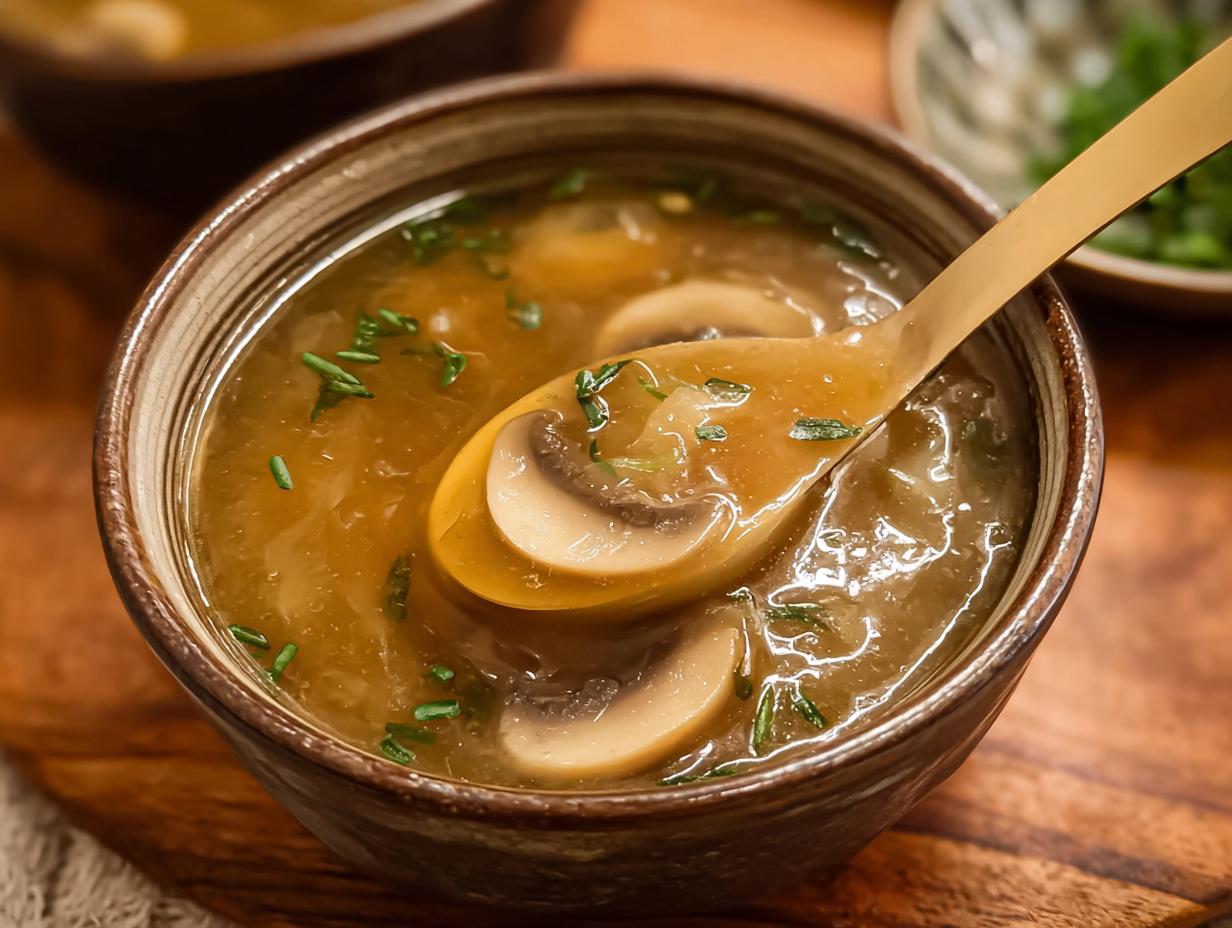
Japanese onion soup has a way of warming you from the inside out, like a comforting hug in a bowl. I still remember the first time I tried an authentic version; the deeply caramelized onions released a sweet, savory aroma that promised pure deliciousness. It’s so much more than just broth and onions; it’s a truly savory Japanese onion soup experience. If you’ve ever wondered, “What is Japanese onion soup?”, it’s a testament to how simple ingredients can create profound flavors. This recipe captures that magic, and I can’t wait for you to try it. Let’s get cooking!
Why You’ll Love This Japanese Onion Soup
- The flavor is incredibly rich and satisfying, a truly savory Japanese onion soup that will impress.
- It’s surprisingly quick to make, making it an easy Japanese onion soup for busy weeknights.
- Packed with nutrients from onions and mushrooms, it’s a healthy choice.
- It’s incredibly budget-friendly, using pantry staples to create a gourmet taste.
- This soup is a winner with the whole family; even picky eaters love its sweet, mild flavor.
- This is an easy Japanese onion soup to prepare, even if you’re new to cooking Japanese-inspired dishes.
- The aroma of caramelized onions alone is worth making this recipe!
Ingredients for Japanese Onion Soup
Gathering these simple Japanese onion soup ingredients is the first step to creating this comforting dish. You’ll find these components are readily available and contribute to the soup’s unique flavor profile. For more on the benefits of onions, check out the many benefits of onions.
- 1 tablespoon neutral oil – like vegetable or canola, to start the caramelization process
- 2 large yellow onions, thinly sliced – the star of the show, thinly sliced for even caramelization
- 4 cups vegetable broth – the base of our savory broth
- 2 cups water – to balance the richness of the broth
- 1 tablespoon soy sauce – adds a crucial umami depth and saltiness
- 1 cup sliced mushrooms – for an earthy, grounding flavor
- Salt to taste – to enhance all the flavors
- Pepper to taste – for a hint of warmth
- Optional: chopped scallions for garnish – for a fresh, bright finish
How to Make Japanese Onion Soup
Let’s dive into how to make Japanese onion soup! This recipe is all about patience and letting those onions work their magic. The process is simple, but achieving that deep, sweet flavor is key to a truly delicious bowl.
- Step 1: Begin by heating 1 tablespoon of neutral oil in a large pot or Dutch oven over medium heat.
- Step 2: Add your 2 large yellow onions, thinly sliced, to the hot pot. Cook them slowly, stirring occasionally, for about 20 to 30 minutes. You’re looking for them to become deeply caramelized, turning a rich golden-brown color and releasing a sweet, irresistible aroma. Don’t rush this step; it’s crucial for that signature sweetness!
- Step 3: Once the onions are beautifully caramelized, pour in 4 cups of vegetable broth and 2 cups of water. Stir everything together, scraping up any browned bits from the bottom of the pot – that’s pure flavor!
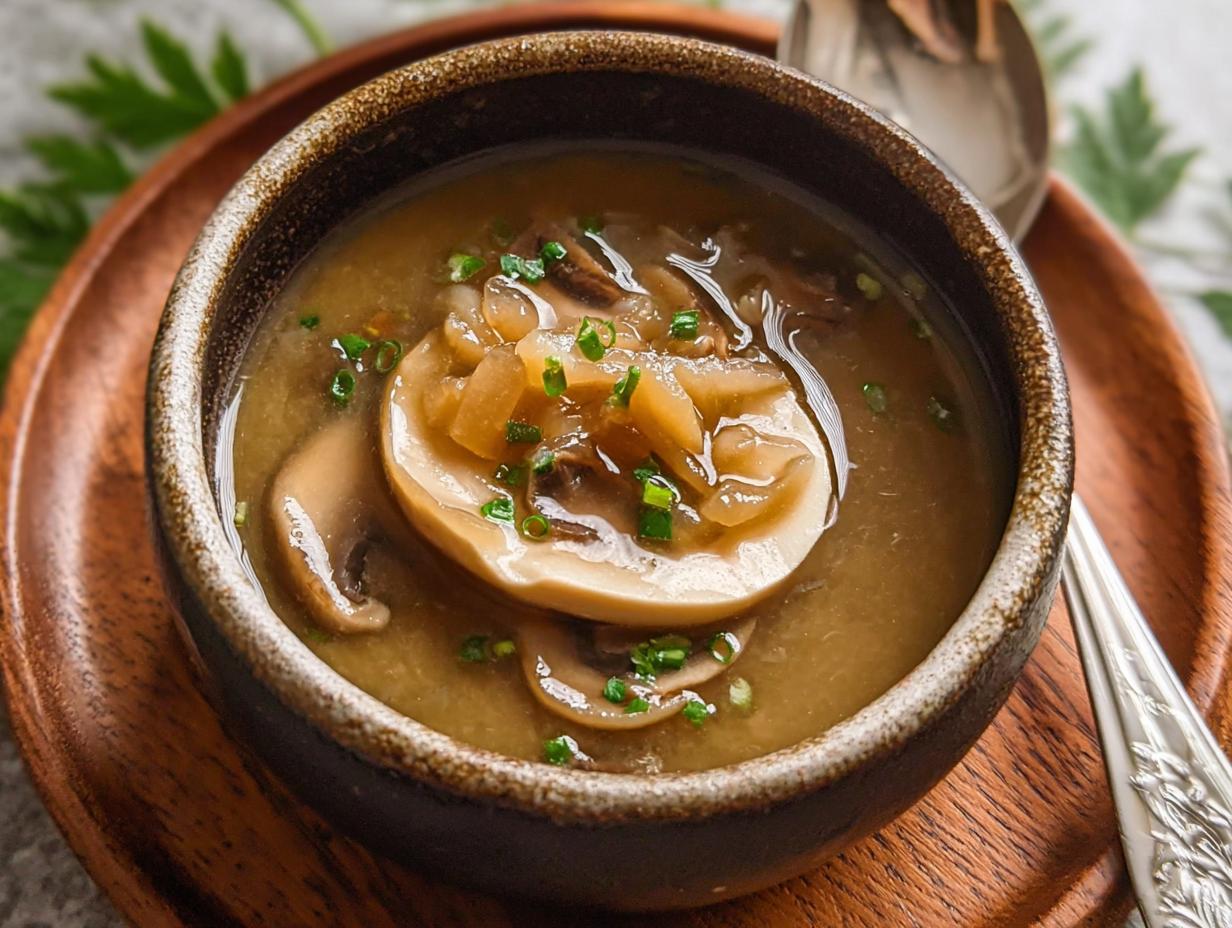
- Step 4: Bring the liquid to a gentle simmer. Stir in 1 tablespoon of soy sauce for that essential umami kick and the 1 cup of sliced mushrooms.
- Step 5: Let the soup simmer for another 10 to 15 minutes. This allows the mushrooms to cook through and all the flavors to meld together, creating a wonderfully savory broth Japanese style.
- Step 6: Taste the soup and season with salt to taste and pepper to taste. Adjust as needed to get that perfect balance.
- Step 7: Ladle the hot soup into bowls. Garnish with chopped scallions if you like, for a fresh, bright finish. Enjoy your authentic Japanese onion soup!
Pro Tips for the Best Japanese Onion Soup
Achieving that perfect bowl of Japanese onion soup is all about a few key techniques. Follow these tips, and you’ll be amazed at the depth of flavor you can create right in your own kitchen. These little secrets elevate a simple soup into something truly special. For a similar comforting experience, try this roasted carrot soup.
- Patience is key for caramelizing the onions; don’t rush this process, as it builds the foundation of sweetness and depth for your Japanese onion soup.
- For an even deeper flavor, consider using a combination of vegetable broth and dashi for a more authentic Japanese onion broth experience.
- Thinly and evenly slicing your onions ensures they caramelize uniformly, preventing some from burning while others remain undercooked.
- Don’t be afraid to let the soup simmer a bit longer after adding the mushrooms and soy sauce; this allows the flavors to truly meld into a harmonious savory Japanese onion soup.
What’s the secret to perfect Japanese onion soup?
The absolute secret to a perfect Japanese caramelized onion soup is the slow, patient caramelization of the onions. This process breaks down their sugars, creating an incredible sweetness and depth that forms the soul of the soup.
Can I make Japanese Onion Soup ahead of time?
Yes, you absolutely can! You can caramelize the onions and prepare the soup base a day in advance. Store it covered in the refrigerator. Reheat gently on the stovetop before serving and adding any fresh garnishes.
How do I avoid common mistakes with Japanese Onion Soup?
Avoid burning the onions by keeping the heat on medium-low and stirring frequently. Also, ensure your onion slices are uniform in thickness for even cooking. Don’t oversalt; the soy sauce adds plenty of saltiness to this Japanese onion soup.
Best Ways to Serve Japanese Onion Soup
Serving this delightful soup is all about complementing its delicate, savory flavors. It’s perfect as a starter or a light meal on its own. When preparing an Onion soup Japan style meal, consider pairing it with simple, clean-tasting sides that won’t overpower the soup’s nuanced profile. For a similar light meal, consider a mediterranean chickpea salad.
- As a starter, serve a smaller portion alongside grilled fish or teriyaki chicken. The soup’s warmth and umami notes create a lovely opening to a Japanese-inspired meal.
- For a light lunch, enjoy a generous bowl of this Japanese onion soup with a simple side salad dressed with a light vinaigrette.
- Consider crusty bread for dipping if you’re not sticking strictly to Japanese cuisine, though it’s less traditional for this style of soup. You can find a great recipe for ciabatta bread here.
Nutrition Facts for Japanese Onion Soup
This nourishing bowl of Japanese onion soup is surprisingly light. Here are the approximate nutritional details per serving, helping you understand what makes this Onion soup Japan style so wholesome. It’s a fantastic way to enjoy deep flavors without heavy calories.
- Calories: 150
- Fat: 5g
- Saturated Fat: 1g
- Unsaturated Fat: 4g
- Trans Fat: 0g
- Protein: 3g
- Carbohydrates: 25g
- Fiber: 4g
- Sugar: 15g
- Sodium: 800mg
- Cholesterol: 0mg
Nutritional values are estimates and may vary based on specific ingredients used.
How to Store and Reheat Japanese Onion Soup
Proper storage ensures your delicious Japanese onion soup stays flavorful and safe to eat. Once cooked, allow the soup to cool completely before transferring it to airtight containers. This prevents condensation, which can affect the broth’s quality. For the best experience with reheating Japanese onion broth, I recommend storing it in the refrigerator for up to 3-4 days. It also freezes beautifully! For longer storage, portion the soup into freezer-safe containers or bags, leaving a little headspace for expansion. It can be kept frozen for up to 3 months. When you’re ready to enjoy it again, thaw it overnight in the refrigerator and then gently reheat it on the stovetop over low to medium heat, stirring occasionally, until heated through. Avoid microwaving if you want to maintain the best texture and flavor.
Frequently Asked Questions About Japanese Onion Soup
Why is Japanese onion soup popular?
Japanese onion soup is popular because it offers a deeply satisfying, savory flavor profile that is both comforting and sophisticated. It’s a wonderful example of how simple ingredients, like caramelized onions and a well-seasoned broth, can create something truly special and umami-rich. It’s a lighter, cleaner alternative to some Western-style onion soups, making it a favorite starter or light meal.
Can I add miso to my Japanese onion soup?
Absolutely! You can create a delicious Miso onion soup recipe by whisking in a tablespoon or two of white or yellow miso paste towards the end of cooking. Make sure to dissolve the miso in a little of the warm broth before adding it to the main pot to prevent clumps. It adds another layer of savory depth and a lovely creamy texture.
What kind of mushrooms work best in Japanese onion soup?
For this Japanese onion soup, shiitake mushrooms are a fantastic choice as they offer a robust, earthy flavor that complements the caramelized onions beautifully. However, cremini mushrooms also work very well and are readily available. If you want to add more texture, a mix of both is a great option! For a different soup experience, try this spaghetti with mushroom sauce.
How do I achieve a clear Japanese onion broth?
To get a Clear Japanese onion broth, focus on simmering gently rather than boiling vigorously, as boiling can emulsify fats and solids, making the broth cloudy. Also, straining the broth after simmering, removing the solids without pressing them, will help maintain clarity. Skimming any impurities that rise to the surface during simmering also contributes to a cleaner appearance.
Variations of Japanese Onion Soup You Can Try
Once you’ve mastered the basic Japanese onion soup, there are so many ways to get creative! Whether you’re looking for a dietary tweak or a flavor adventure, these variations will keep your soup repertoire exciting. Exploring these options can also help you discover new favorites, like a truly authentic Dashi onion soup recipe.
- For a Deeper Umami: Swap half of the vegetable broth for dashi or chicken broth. You can also add a splash of mirin for a touch of sweetness and complexity. This creates a richer, more profound flavor profile.
- For a Clearer Broth: If you prefer a lighter, more refined soup, focus on achieving a Clear Japanese onion broth. This involves simmering gently and carefully skimming any impurities. You can also strain the soup through cheesecloth after cooking for ultimate clarity.
- Add Protein: For a heartier meal, consider adding thinly sliced cooked chicken, pork, or even some firm tofu. These additions make the soup a more substantial main course.
- Spicy Kick: For those who enjoy a little heat, stir in a teaspoon of chili paste (like gochujang or sriracha) or a pinch of red pepper flakes along with the soy sauce. This adds a wonderful warmth to the savory broth.
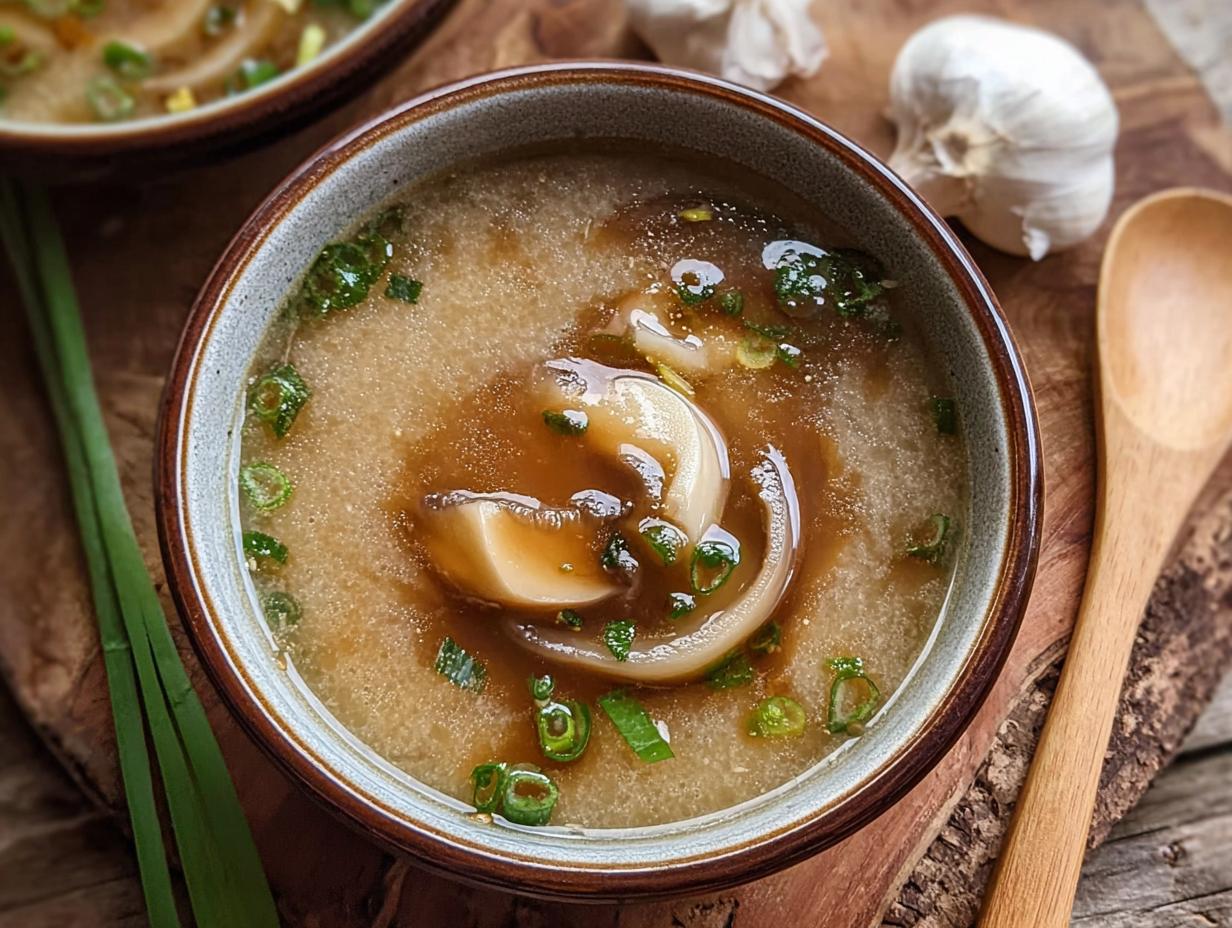
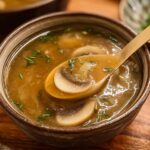
Savory Japanese Onion Soup: 1 Stunning Bowl
- Prep Time: 10 minutes
- Cook Time: 40 minutes
- Total Time: 50 minutes
- Yield: 4 servings 1x
- Category: Soup
- Method: Stovetop
- Cuisine: Japanese
- Diet: Vegan
Description
A comforting and savory Japanese onion soup, featuring caramelized onions, earthy mushrooms, and a hint of soy sauce. This easy-to-make soup is perfect as a starter or a light main course, offering a warm and nourishing experience.
Ingredients
- 1 tablespoon neutral oil
- 2 large yellow onions, thinly sliced
- 4 cups vegetable broth
- 2 cups water
- 1 tablespoon soy sauce
- 1 cup sliced mushrooms
- Salt to taste
- Pepper to taste
- Optional: chopped scallions for garnish
Instructions
- Heat the oil in a large pot or Dutch oven over medium heat.
- Add the sliced onions and cook, stirring occasionally, until they are deeply caramelized and sweet, about 20-30 minutes.
- Pour in the vegetable broth and water. Bring to a simmer.
- Stir in the soy sauce and sliced mushrooms.
- Simmer for another 10-15 minutes, allowing the flavors to meld.
- Season with salt and pepper to taste.
- Serve hot, garnished with chopped scallions if desired.
Notes
- For a richer flavor, use dashi broth instead of vegetable broth.
- Ensure onions are thinly and evenly sliced for consistent caramelization.
- Adjust soy sauce quantity based on your preference for saltiness.
- This Japanese onion soup is naturally vegan.
Nutrition
- Serving Size: 1 bowl
- Calories: 150
- Sugar: 15g
- Sodium: 800mg
- Fat: 5g
- Saturated Fat: 1g
- Unsaturated Fat: 4g
- Trans Fat: 0g
- Carbohydrates: 25g
- Fiber: 4g
- Protein: 3g
- Cholesterol: 0mg
Keywords: Japanese onion soup, Japanese onion broth, Onion soup Japan style, Miso onion soup recipe, Savory Japanese onion soup, Japanese caramelized onion soup, Clear Japanese onion broth, Dashi onion soup recipe, Easy Japanese onion soup, Traditional Japanese onion soup