Introduction
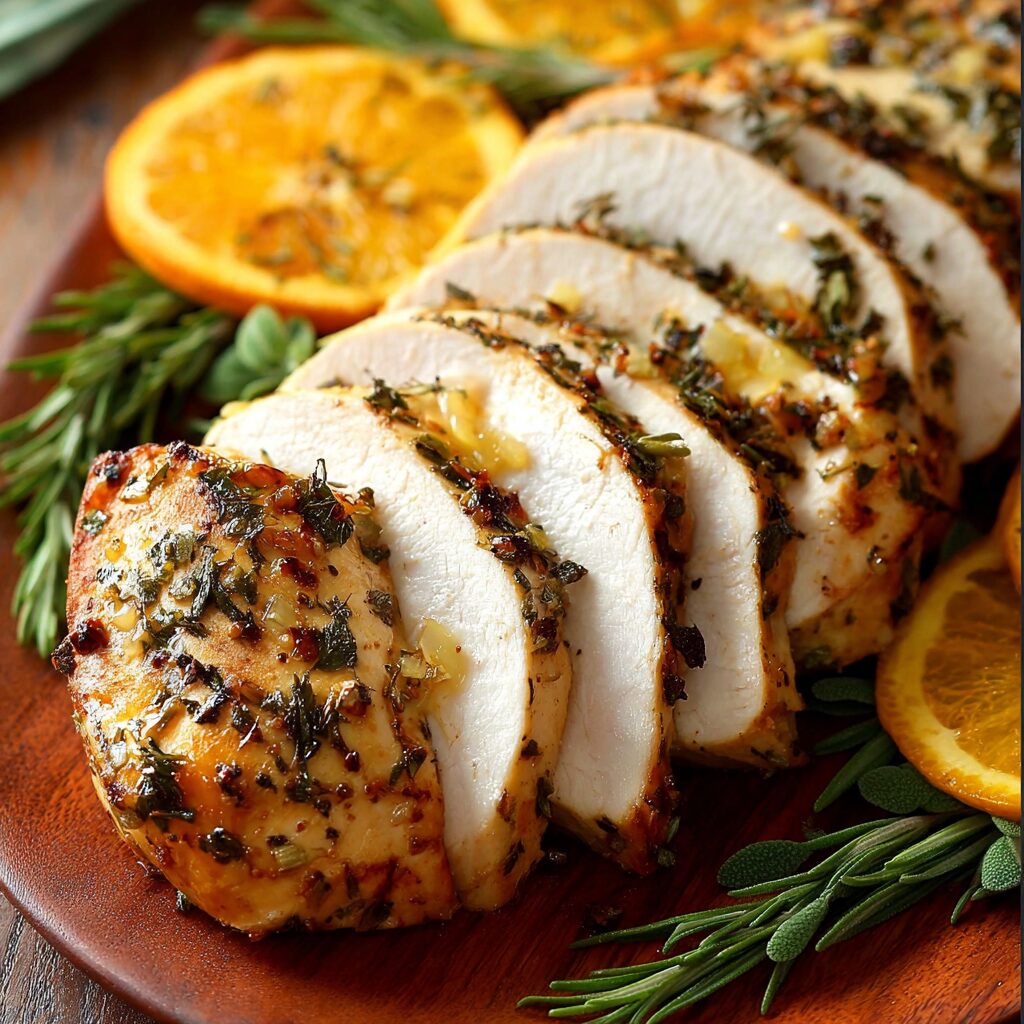
The holiday season beckons with the allure of festive feasts, and few dishes embody this spirit like an herb-roasted turkey breast with a zesty citrus glaze. This dish not only delights the palate with its aromatic blend of herbs but also layers on a vibrant sweetness from the citrus.
Preparing turkey breast can often seem daunting, but it doesn’t have to be. With a handful of simple ingredients and a bit of patience, you can create a centerpiece that impresses family and friends. The key here is marrying the robust flavors of fresh herbs with the bright notes of orange and lemon, resulting in a dish that is both elegant and comforting.
Ingredients
- 1 turkey breast (4-5 pounds)
The star of the dish, turkey breast provides a lean source of protein that, when roasted, transforms into a succulent, juicy centerpiece for any gathering. - 3 tablespoons olive oil
Olive oil not only helps to crisp the skin, enhancing texture, but it also carries the flavors of the herbs into the meat, ensuring every bite bursts with flavor. - 1 tablespoon chopped fresh thyme
Thyme brings a subtle earthiness that complements the turkey’s natural flavor, adding a layer of complexity and aromatic depth to the dish. - 1 tablespoon chopped fresh rosemary
With its strong, pine-like flavor, rosemary adds a fragrant note that elevates the overall taste profile, making the turkey feel festive and special. - 1/2 cup orange juice
The sweetness and acidity of orange juice from fresh oranges not only enhances the glaze but also tenderizes the meat, creating a juicy roast. - 1/4 cup lemon juice
Lemon juice provides a refreshing tartness that balances the sweetness of the orange juice, brightening the overall flavor of the turkey. - 3 tablespoons honey
Honey adds a rich sweetness that caramelizes beautifully in the oven, forming a stunning glaze that enhances both the visual appeal and flavor. - Salt and pepper to taste
Simple yet essential, salt and pepper season the turkey appropriately, bringing all the flavors into harmony and ensuring a well-rounded taste.
Directions & Preparation
Step 1: Preheat your oven to 375°F (190°C).
Preheating the oven is a crucial step to ensure even cooking. Starting at the right temperature helps the turkey skin to crisp up nicely and lock in moisture, giving you that golden-brown finish.
Step 2: Rinse the turkey breast under cold water and then pat it dry with paper towels.
Drying the turkey is essential for achieving crispy skin. Excess moisture can create steam during cooking, preventing that desirable crispiness and affecting the roasting process.
Step 3: In a small bowl, whisk together olive oil, thyme, rosemary, honey, orange juice, and lemon juice.
Whisking these ingredients together creates a marinade that evenly distributes flavors throughout the turkey. This step also emulsifies the oil with the juices, ensuring a cohesive glaze that clings beautifully.
Step 4: Rub the marinade all over the turkey breast, including under the skin if possible.
Applying the marinade directly onto the meat under the skin allows the flavors to penetrate deeply, improving taste and moisture retention. Ensuring every part of the turkey is covered maximizes flavor.
Step 5: Season the turkey breast generously with salt and pepper.
Seasoning the turkey is essential for enhancing its natural flavors and ensuring it doesn’t taste bland. Proper seasoning balances the dish, especially with the sweetness of the glaze.
Step 6: Place the turkey breast in a roasting pan and cover it loosely with foil.
Covering the turkey with foil initially helps to lock in moisture, preventing it from drying out while allowing it to roast evenly. This prevents over-browning in the early stages, ensuring a juicy result.
Step 7: Roast in the preheated oven for about 1 hour, then remove the foil and continue roasting for an additional 30-45 minutes, or until the internal temperature reaches 165°F (74°C).
This step helps to achieve the perfect roast. Removing the foil allows the skin to crisp up while the residual heat cooks the inside gently. Monitoring the temperature with a meat thermometer is key to avoiding overcooking.
Step 8: Baste the turkey with the pan juices every 15 minutes during the last stages of cooking.
Basting continually keeps the turkey moist and enhances the glaze, allowing the flavors to meld perfectly into the meat. This step can also prevent the surface from drying out.
Step 9: Once cooked, allow the turkey to rest for at least 15 minutes before slicing.
Resting is vital as it allows the juices to redistribute, ensuring each slice remains juicy and tender. Cutting too early can result in a dry roast, diminishing your efforts.
Step 10: Slice the turkey, serve with the pan juices, and enjoy!
Serving the turkey with pan juices rounds out the dish, providing additional flavor and moisture. Enjoying this dish is truly a celebration of flavors and a perfect way to gather with loved ones.

The Importance of Herbs in Roast Turkey
Fresh herbs like thyme and rosemary aren’t just aromatic; they play a vital role in flavor enhancement. Their natural oils infuse the turkey meat with unforgettable tastes that evoke holiday memories. Incorporating herbs into your dishes not only makes them more complex but also adds a touch of vibrancy that elevates humble meals into gourmet experiences.
Getting the Zest Right for the Perfect Glaze
Citrus juice is a game-changer when it comes to glazes. The acidity in orange and lemon juice not only balances sweetness but also helps in tenderizing the meat, resulting in juicy turkey slices. Achieving the right balance of sweetness and tartness in a glaze ensures that every bite is refreshing, cutting through the richness of the turkey.
Resting – A Crucial Final Step
Allowing the turkey to rest post-roasting is one of the most critical steps in preparing a perfect dish. This process lets the meat fibers relax and reabsorb the juices, preventing dryness. It’s tempting to slice immediately for presentation, but patience here pays off, delivering tenderness and juiciness that is well worth the time.
FAQs
What can I do if my glaze is too thick?
If your glaze turns out too thick, thin it with a little more citrus juice or warm water until you reach your desired consistency.
How can I enhance the flavor in case it turns out bland?
To avoid blandness, ensure that you season adequately with salt and allow the herbs to sit in the marinade longer to infuse their flavors effectively.
What should I do if my turkey breast is overcooked?
If your turkey ends up overcooked, serve it with plenty of the pan juices to help moisten the meat while slicing, and consider adding a touch of broth or sauce for additional flavor.
Can I use dried herbs instead of fresh ones?
Yes, but dried herbs are more concentrated; use about one-third the amount compared to fresh herbs. Adjust according to your taste preferences.
What if I have a smaller turkey breast?
For a smaller turkey breast, reduce the marinating time and cooking time accordingly, keeping a close eye on the internal temperature.
What if I want to make more glaze?
To make more glaze, simply double the proportions of the ingredients in the glaze recipe, but adjust the seasoning to taste.
Conclusion
Herb-roasted turkey breast with citrus glaze is a beautiful dish that combines excitement with simplicity, making it ideal for any meal. The balance of herbs and citrus brings a delightful twist to a classic favorite.
By following these steps and tips, you can craft a turkey breast that captures the essence of home cooking. Enjoy the process, and savor every moment spent around the table with loved ones.
Recipe Card
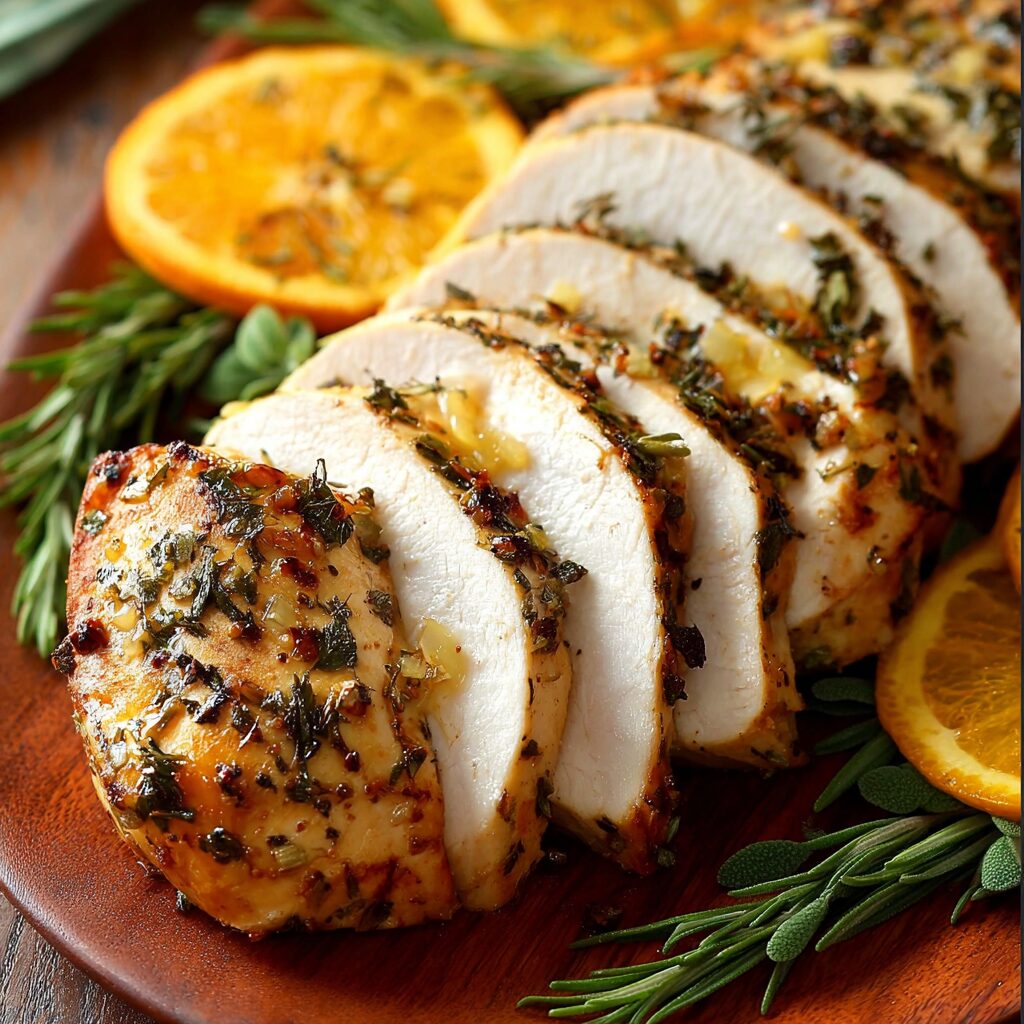
Herb-Roasted Turkey Breast with Citrus Glaze
Ingredients
Method
- Preheat your oven to 375°F (190°C).
- Rinse the turkey breast under cold water and then pat it dry with paper towels.
- In a small bowl, whisk together olive oil, thyme, rosemary, honey, orange juice, and lemon juice.
- Rub the marinade all over the turkey breast, including under the skin if possible.
- Season the turkey breast generously with salt and pepper.
- Place the turkey breast in a roasting pan and cover it loosely with foil.
- Roast in the preheated oven for about 1 hour, then remove the foil and continue roasting for an additional 30-45 minutes, or until the internal temperature reaches 165°F (74°C).
- Baste the turkey with the pan juices every 15 minutes during the last stages of cooking.
- Once cooked, allow the turkey to rest for at least 15 minutes before slicing.
- Slice the turkey, serve with the pan juices, and enjoy!
Tried this recipe?
Let us know how it was!Notes
Additional serving suggestions: pair with a crisp salad, garlic bread, or roasted seasonal vegetables for balance.
For make-ahead, prep components separately and assemble just before heating to preserve texture.
Taste and adjust with acid (lemon/vinegar) and salt right at the end to wake up flavors.