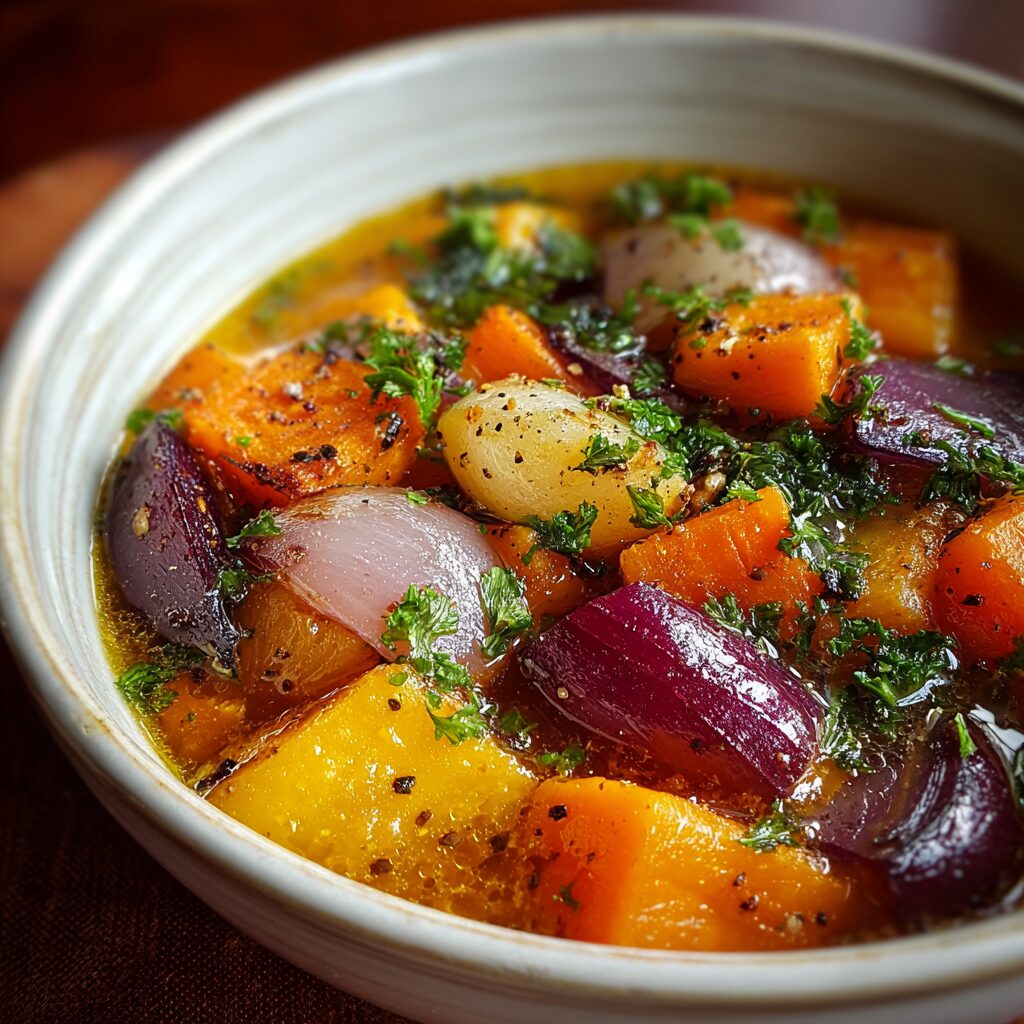
Introduction
As the temperature drops and winter settles in, there's nothing quite like a warm bowl of roasted winter vegetable soup to comfort the soul. This soup showcases the vibrant flavors and textures of seasonal produce, turning humble vegetables into a rich and hearty meal.
Roasting the vegetables before blending them elevates their natural sweetness, creating a deep, complex flavor profile that can't be achieved with boiling alone. It’s a wonderful way to highlight ingredients like butternut squash, carrots, and parsnips, making them the stars of the dish. Perfect for cold days, this soup is satisfying and nourishing.
You can enjoy this soup on its own or pair it with crusty bread for a complete winter meal. Plus, it’s an excellent way to incorporate more vegetables into your diet while indulging in a comforting classic.
Ingredients
- 2 cups butternut squash, peeled and cubed
Butternut squash adds a natural sweetness and creamy texture to the soup. Its vibrant color also enhances the visual appeal of the dish, making it more inviting. When roasted, it caramelizes beautifully, boosting its flavor. - 2 cups carrots, peeled and cut into chunks
Carrots not only contribute sweetness but also a bright, orange hue to the soup. Rich in beta-carotene, they are nutritious and add depth to the flavor profile of the roasted vegetables. - 2 cups parsnips, peeled and cut into chunks
Parsnips bring an earthy flavor with a hint of sweetness, complementing the butternut squash and carrots. Their starchiness helps create a creamy base when blended, enriching the soup's texture. - 1 large red onion, cut into wedges
Red onion adds a hint of sharpness and complexity to the soup. When caramelized, it becomes sweet and mellow, balancing the other flavors perfectly. Its color also enhances the overall visual appeal. - 4 cloves garlic, peeled
Garlic imparts a fragrant aroma and depth of flavor. Roasting it transforms its sharpness into a mellow, sweet element, tying the flavors of the soup together seamlessly. - 4 cups vegetable broth
Vegetable broth serves as the base of the soup, providing a savory depth. It infuses the roasted vegetables with additional flavor, ensuring a well-rounded taste without overpowering the dish. - 1 teaspoon dried thyme
Thyme is a classic herb that enhances the earthy notes of the vegetables. It adds a fragrant, herbal quality, balancing the sweetness of the roasted ingredients with an aromatic touch. - 1 teaspoon dried rosemary
Rosemary contributes a slightly piney flavor that pairs beautifully with winter vegetables. Its robustness stands up well to roasting, adding a warm, woodsy undertone to the soup. - ½ teaspoon ground nutmeg
Nutmeg adds warmth and a hint of spice, elevating the overall flavor of the soup. Used sparingly, it can punctuate the sweetness of the vegetables without overpowering them. - ½ cup heavy cream (optional)
Heavy cream adds a luscious, velvety texture to the soup, enriching the mouthfeel. It’s optional for those looking to keep the soup lighter but recommended for a creamy finish. - 2 tablespoons olive oil
Olive oil not only helps with roasting the vegetables by promoting even cooking but also adds a subtle richness. It ensures that the vegetables caramelize well, enhancing the flavor of the final dish. - Salt and black pepper to taste
Seasoning with salt and pepper is crucial to enhance the natural flavors of the ingredients. Proper seasoning can elevate the entire dish, ensuring that every bite is well-balanced and flavorful.
Directions & Preparation
Step 1: Preheat your oven to 400°F (200°C).
Preheating your oven is essential for even roasting. Starting with a hot oven ensures that the vegetables caramelize rather than steam, leading to a richer flavor and a pleasing texture.
Step 2: Place the butternut squash, carrots, parsnips, red onion, and garlic on a large baking sheet.
Spreading the vegetables out on a baking sheet in a single layer ensures even cooking and browning. Crowding the pan can cause the veggies to steam instead of roast, resulting in a less flavorful outcome.
Step 3: Drizzle the olive oil over the vegetables, and season with salt and black pepper.
The olive oil not only helps in the roasting process but also ensures the vegetables are well seasoned. Mixing the oil and seasoning evenly allows for consistent flavor and texture across all the vegetables.
Step 4: Toss the vegetables well to ensure they are evenly coated with oil and seasoning.
Tossing the vegetables before roasting is crucial for even cooking. This step ensures all pieces are coated, which leads to uniform browning and prevents some vegetables from being over-seasoned while others are too bland.
Step 5: Roast in the preheated oven for 30-35 minutes, or until the vegetables are tender and slightly caramelized. Stir halfway through roasting.
Stirring the vegetables halfway through the roasting time promotes even cooking and prevents burning. Look for a golden-brown edge, which indicates proper caramelization, enhancing the soup's flavor.
Step 6: Remove the roasted vegetables from the oven and transfer them to a large pot.
Transferring the roasted vegetables into a pot allows you to blend them with the broth easily. Ensure to scrape in any caramelized bits from the baking sheet, as they contain intense flavor.
Step 7: Add the vegetable broth, dried thyme, dried rosemary, and ground nutmeg to the pot.
Incorporating these ingredients adds depth and balance to the dish. The herbs enhance the flavors already present in the vegetables while the broth serves as the foundation for the soup.
Step 8: Bring the mixture to a boil over medium-high heat, then reduce the heat to low and simmer for 10-15 minutes.
Simmering allows the flavors to meld and develops the soup's character. This step is crucial for infusing the broth with the essence of the roasted vegetables and herbs.
Step 9: Use an immersion blender to puree the soup until smooth. Alternatively, transfer the mixture to a blender in batches and blend until smooth, then return it to the pot.
Blending the soup creates a creamy and cohesive consistency. An immersion blender is convenient, but transferring to a blender can give you an even smoother texture if desired.
Step 10: If you desire a creamier texture, stir in the heavy cream and heat the soup gently without boiling.
Adding heavy cream enriches the soup, making it luxurious. Keeping it on low heat prevents the cream from curdling while allowing it to meld seamlessly into the soup.
Step 11: Taste and adjust seasoning with additional salt or pepper if needed.
Tasting the soup before serving ensures it meets your flavor preference. Adjusting the seasoning at this stage can transform a good soup into a truly great one, enhancing the palate's experience.
Step 12: Serve the soup hot, garnished with chopped fresh parsley.
Garnishing with fresh parsley adds a pop of color and a bright, fresh flavor. It completes the dish, making it visually appealing and inviting for your guests.

Enhancing Flavor with Roasted Garlic
Roasting garlic adds a sweet, mellow flavor that elevates the soup's taste. Instead of using raw garlic, which can be sharp, roasting transforms it into a creamy and fragrant element, integral to the soup's velvety texture. This method ensures every spoonful is infused with garlic's warmth, offering depth to the overall experience.
The Art of Balancing Flavors
Achieving a harmonious balance of flavors is crucial in any soup. The sweetness of the roasted vegetables should contrast with the fragrant herbs and savory broth. Adjustments can be made by adding a splash of vinegar or a hint of spice to lift the flavors further, creating a complex, satisfying finish that will entice your palate.
Perfect Pairings for Your Soup
While this roasted winter vegetable soup is delicious on its own, pairing it with a crunchy baguette or a side salad can elevate your meal. A light, citrusy salad can provide a refreshing contrast to the richness of the soup, while toasted bread allows for delightful dipping. The combination offers a full sensory experience that satiates both hunger and the desire for warmth.
FAQs
What if my soup turns out too thick?
If the soup is too thick for your liking, simply add more vegetable broth or water to reach your desired consistency. Stir well and let it heat through to ensure proper blending.
How can I make the soup spicier?
To add some heat, incorporate red pepper flakes or a dash of cayenne pepper while simmering. Start with a small amount and adjust to your heat preference.
Can I use frozen vegetables instead?
Yes, though the texture may differ slightly. If using frozen vegetables, adjust roasting time since they may require less cooking. Aim for even heat to ensure proper flavor development.
What should I do if the soup tastes bland?
If the soup lacks flavor, revisit your seasoning. Try adding a pinch of salt, a squeeze of lemon juice, or a dash of soy sauce to enhance the depth and brightness of the dish.
Can I add other vegetables to this recipe?
Absolutely! Feel free to experiment by adding vegetables like sweet potatoes, celery, or turnips. Each addition will provide a unique flavor while maintaining the soup's core essence.
What is the best way to reheat this soup?
Reheating on the stovetop is ideal. Gently warm the soup over low heat, stirring occasionally until heated through. This prevents scorching and preserves the soup's creamy texture.
Conclusion
This roasted winter vegetable soup is a celebration of seasonal produce and comforting flavors, perfect for chilly days. Its versatile nature allows you to adapt the recipe based on what’s in your pantry or garden, ensuring a fresh experience each time.
As you cozy up with a warm bowl, remember that cooking is about exploration and enjoyment. Embrace the process, and don’t hesitate to let your creativity shine through with this delightful dish.
Recipe Card
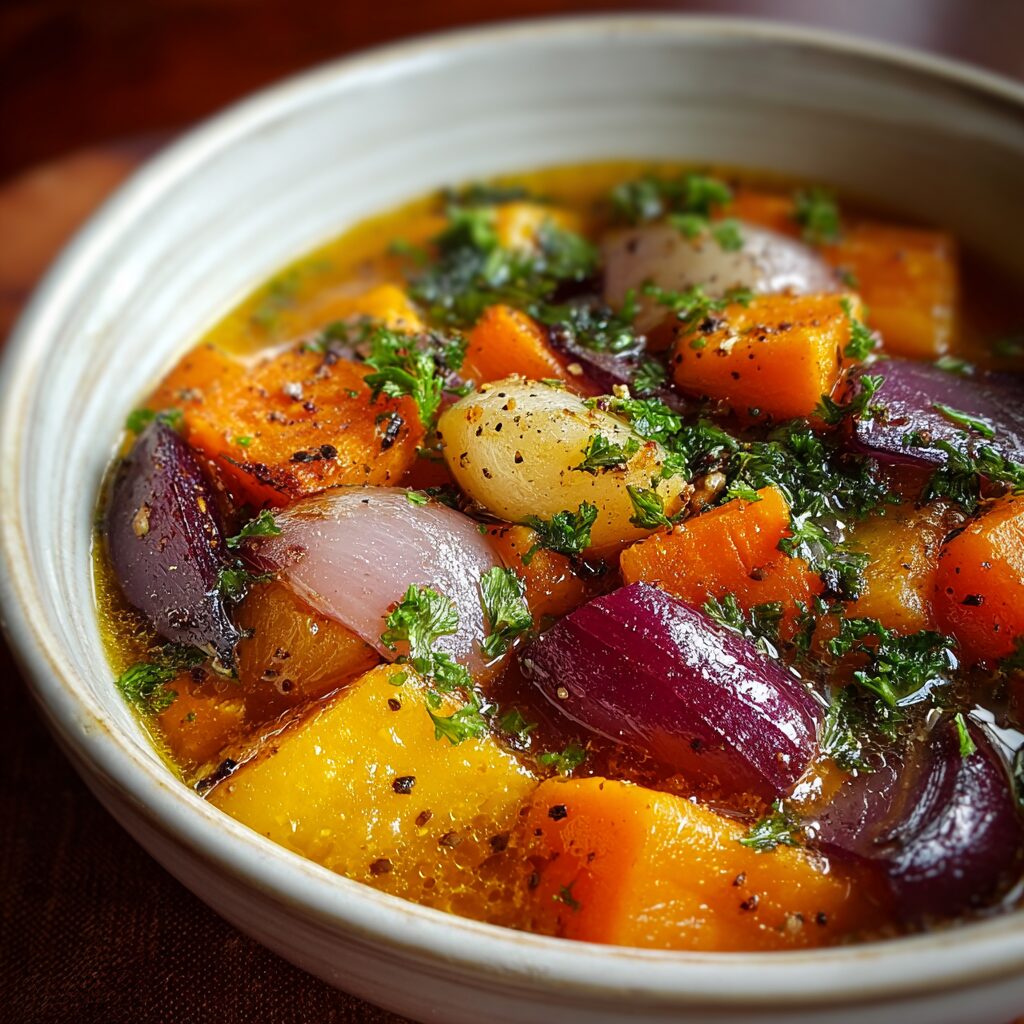
Cozy Roasted Winter Vegetable Soup Recipe
Ingredients
Method
- Preheat your oven to 400°F (200°C).
- Place the butternut squash, carrots, parsnips, red onion, and garlic on a large baking sheet.
- Drizzle the olive oil over the vegetables, and season with salt and black pepper.
- Toss the vegetables well to ensure they are evenly coated with oil and seasoning.
- Roast in the preheated oven for 30-35 minutes, or until the vegetables are tender and slightly caramelized. Stir halfway through roasting.
- Remove the roasted vegetables from the oven and transfer them to a large pot.
- Add the vegetable broth, dried thyme, dried rosemary, and ground nutmeg to the pot.
- Bring the mixture to a boil over medium-high heat, then reduce the heat to low and simmer for 10-15 minutes.
- Use an immersion blender to puree the soup until smooth. Alternatively, transfer the mixture to a blender in batches and blend until smooth, then return it to the pot.
- If you desire a creamier texture, stir in the heavy cream and heat the soup gently without boiling.
- Taste and adjust seasoning with additional salt or pepper if needed.
- Serve the soup hot, garnished with chopped fresh parsley.
Tried this recipe?
Let us know how it was!Notes
Additional serving suggestions: pair with a crisp salad, garlic bread, or roasted seasonal vegetables for balance.
For make-ahead, prep components separately and assemble just before heating to preserve texture.
Taste and adjust with acid (lemon/vinegar) and salt right at the end to wake up flavors.